

The World That Refuses to Waste
The Global Shift Toward Zero-Waste Living and the Cultural, Economic, and Environmental Transformations It Sparks
The Birth of a Circular Vision
For centuries, human progress has been defined by production and consumption, a rhythm that left behind mountains of discarded material in its wake. Yet beneath this cycle of excess, a quiet revolution has begun, a movement that envisions a world where waste ceases to exist. The zero-waste philosophy challenges the very foundations of modern consumerism by promoting the idea that every material can find a renewed purpose. Instead of treating waste as inevitable, it reimagines it as a design flaw that can be corrected through innovation, intention, and cooperation. This vision is rooted in circular economy principles, where resources are continually reused, repurposed, and regenerated. The movement is not about perfection but participation, about rethinking the flow of materials so that products, packaging, and systems serve humanity without depleting the planet. The zero-waste vision represents more than environmental reform, it is a cultural awakening to the realization that nothing in nature is ever truly wasted.
Understanding the Anatomy of Waste
To eliminate waste, one must first understand it. Modern societies have built complex systems of disposal that hide the consequences of consumption. Landfills are placed far from cities, plastics float invisibly in oceans, and emissions drift beyond sight. The zero-waste approach exposes these hidden connections, urging individuals and institutions to trace every product from creation to decomposition. Waste is not simply what we throw away; it is the result of design choices, economic pressures, and cultural habits. For example, single-use plastics exist because they are cheap and convenient, not because they are necessary. Food waste occurs because of inefficient distribution, aesthetic standards, and lack of awareness. By mapping the lifecycle of waste, zero-waste thinkers reveal points of intervention, where redesign, reuse, and recycling can interrupt the flow of pollution. The anatomy of waste is complex, yet once understood, it becomes a blueprint for transformation. Awareness is the first act of repair.
The Role of Design in a Waste-Free World
Design shapes behavior, and behavior shapes impact. From packaging to architecture, design decisions determine whether materials endure or disappear. Zero-waste design begins by asking a simple question: what happens to this product when it is no longer useful? The answer dictates its fate. If an object can be repaired, recycled, or composted, it contributes to sustainability; if not, it becomes part of the problem. Designers and engineers are now rethinking products to ensure longevity, modularity, and recoverability. Fashion brands experiment with fabrics made from agricultural byproducts, while architects use reclaimed materials to build circular structures. Industrial designers explore biodegradable packaging and closed-loop manufacturing systems. The zero-waste movement sees design as an act of foresight, not just creativity. It is not enough for products to function; they must harmonize with ecological cycles. When form follows sustainability, aesthetics and ethics merge, producing beauty that endures because it does not destroy.
Community Movements and Local Innovation
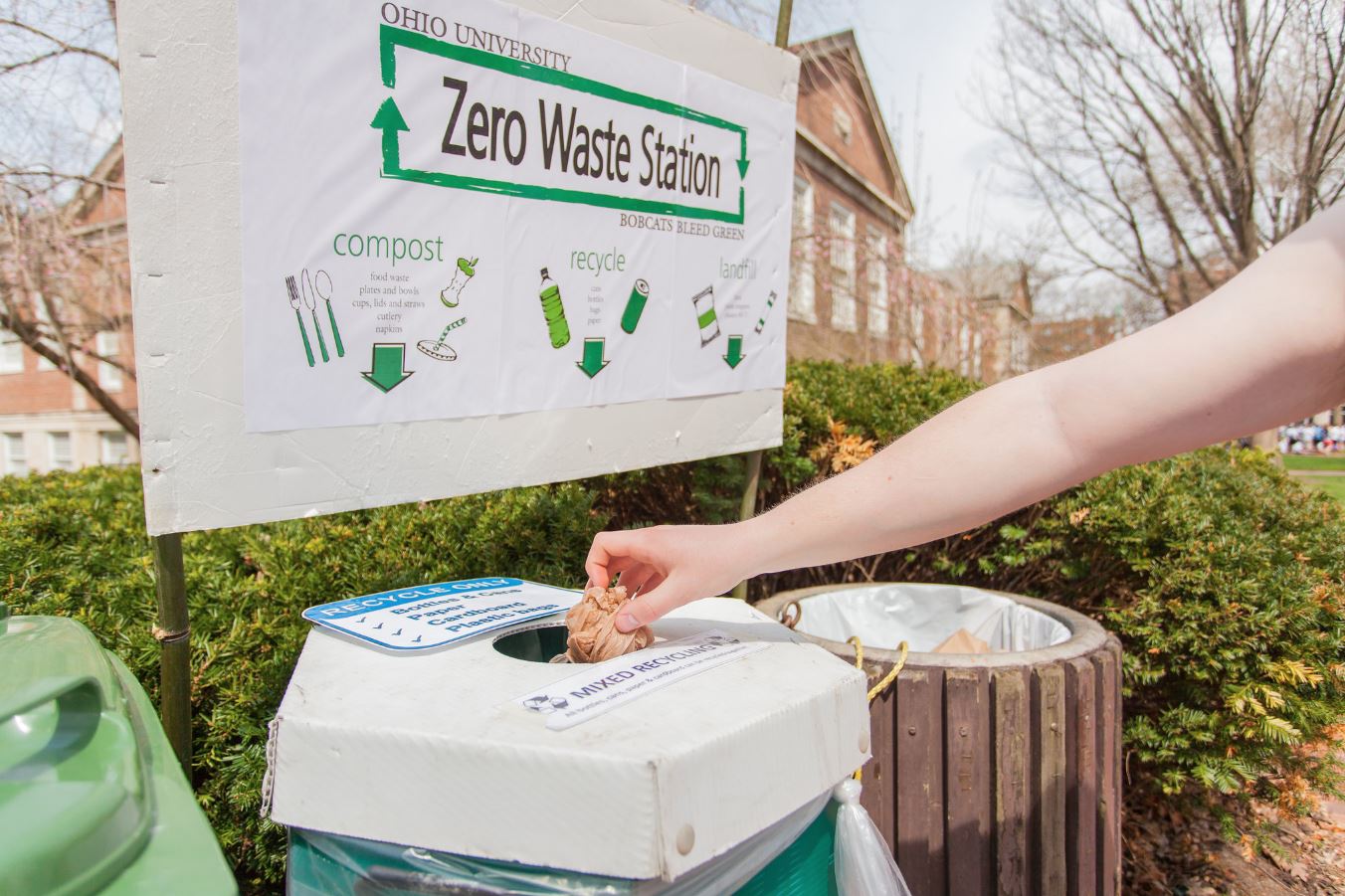
Across the globe, zero-waste initiatives are gaining strength at the community level, where collective effort transforms ideology into action. Cities like Kamikatsu in Japan and Ljubljana in Slovenia have achieved remarkable waste reduction through localized strategies. Residents separate materials meticulously, reuse items creatively, and support municipal composting systems. Grassroots organizations host repair cafés, swap markets, and educational workshops, demonstrating that sustainability flourishes when people collaborate. Urban composting initiatives convert kitchen scraps into fertile soil for local gardens, creating tangible cycles of renewal. These community-led programs prove that change does not require massive infrastructure or policy overhaul; it begins with shared responsibility. Zero-waste neighborhoods often evolve into cultural hubs, where creativity replaces consumption and cooperation replaces convenience. The success of local movements underscores a universal truth: when people reconnect with the material world around them, they rediscover their capacity to restore it.
The Economics of Zero Waste
One of the most persistent myths about sustainability is that it conflicts with economic growth. Zero-waste initiatives challenge this misconception by showing that resource efficiency and profitability can coexist. In a circular economy, waste reduction translates into cost savings and new revenue streams. Recycling industries create jobs, while businesses that adopt sustainable packaging attract conscious consumers. Repair services, sharing platforms, and secondhand marketplaces form the backbone of what economists call the regenerative economy. The shift from ownership to access, from buying to borrowing, reshapes entire markets. Governments and corporations are learning that linear models of take-make-dispose are no longer viable in a resource-limited world. When materials are reused rather than extracted, and when waste becomes input rather than output, economic stability improves. The financial argument for zero waste is compelling not because it prioritizes profit, but because it aligns prosperity with planetary health, proving that the two are inseparable in the modern age.
Technology and the Future of Waste Management
Technology serves as both a cause and a cure for the waste crisis. The same innovation that fueled mass production can now be harnessed for regeneration. Artificial intelligence sorts recyclables with precision that human eyes cannot match. Blockchain ensures transparency in waste supply chains, tracking materials from factory to landfill. Advanced biotechnologies create enzymes that break down plastics into reusable monomers. Cities experiment with smart bins that measure waste levels and optimize collection routes, reducing fuel consumption. Digital platforms connect consumers with zero-waste suppliers, promoting circular commerce. However, technology alone cannot solve the problem; it must be guided by ethics and inclusivity. Access to innovation should extend beyond wealthy nations to developing communities, ensuring that sustainability is not a privilege but a universal right. When applied thoughtfully, technology becomes an amplifier of intention, magnifying humanity’s ability to repair what it once damaged and build systems that outlast their creators.
Education and the Culture of Mindful Consumption
The zero-waste movement depends as much on cultural evolution as on technical reform. Education transforms awareness into habit by redefining what it means to consume. Schools, universities, and online platforms teach the principles of circular living, encouraging individuals to question the life cycle of every purchase. Children learn through action, sorting recyclables, composting organic matter, and reducing single-use plastics in cafeterias. Social media amplifies these lessons, turning minimalism and reuse into global trends. Yet true education goes beyond awareness campaigns; it cultivates values of patience, repair, and gratitude. In societies conditioned to equate convenience with progress, slowing down becomes an act of rebellion. When consumers view themselves as stewards rather than spectators, sustainability becomes second nature. The culture of mindful consumption restores meaning to material life, reminding us that every object carries not only a cost but a story, one that can end in waste or in renewal.
Policy, Governance, and the Architecture of Accountability
Governments play a vital role in turning zero-waste ideals into systemic reality. Regulations on plastic production, landfill limits, and producer responsibility programs create the framework for transformation. Extended producer responsibility laws require manufacturers to manage the entire lifecycle of their products, incentivizing design for reuse and recyclability. Cities around the world adopt waste reduction targets, banning single-use plastics and subsidizing composting infrastructure. Policy innovations like deposit-return schemes encourage recycling through economic reward. Yet accountability remains crucial. Without enforcement and transparency, ambitious goals risk becoming symbolic gestures. Public participation strengthens governance by holding corporations and policymakers to their commitments. Successful zero-waste strategies integrate regulation with collaboration, balancing top-down authority with bottom-up initiative. When governance embraces cooperation rather than coercion, environmental progress becomes democratic, empowering citizens to shape the systems that shape their lives. Policy thus becomes not only legislation but a framework for collective consciousness.
Global Collaboration and Shared Responsibility
The journey toward zero waste transcends borders, industries, and ideologies. It requires global cooperation rooted in equity and shared purpose. Developed nations must lead by example, investing in waste infrastructure while supporting developing countries that bear the burden of exported trash. International treaties and trade agreements can harmonize recycling standards and reduce the global flow of waste mismanagement. Nonprofit organizations, research institutions, and citizen networks collaborate to share innovations and success stories. Each region brings unique strengths: Scandinavian nations contribute technological expertise, Pacific island communities model circular resource use, and African entrepreneurs pioneer creative reuse industries. The collective challenge lies not in capability but in will. Humanity’s greatest strength has always been cooperation, and the zero-waste movement is its newest test. The path forward requires humility, empathy, and imagination, the recognition that sustainability is not charity, but survival shared equally by all.
The Legacy of a Waste-Free Future
The pursuit of zero waste is ultimately a pursuit of meaning. It challenges humanity to reconsider its definition of progress and to rebuild its relationship with the natural world. Every piece of waste eliminated is a promise kept to future generations, a silent acknowledgment that the planet deserves more than convenience. The legacy of this movement will not be measured by tonnage reduced or products redesigned, but by the cultural shift it ignites. It teaches that value is not found in accumulation but in continuity, in the unbroken circle of use, renewal, and respect. As communities, industries, and nations adopt the principles of zero waste, they plant the seeds of an economy that mirrors the resilience of nature itself. The world that refuses to waste is not a fantasy; it is a reflection of what humanity becomes when it learns to give back as much as it takes. The future belongs to those who understand that nothing is ever truly disposable.