

Breathing New Life Into the Carbon Cycle
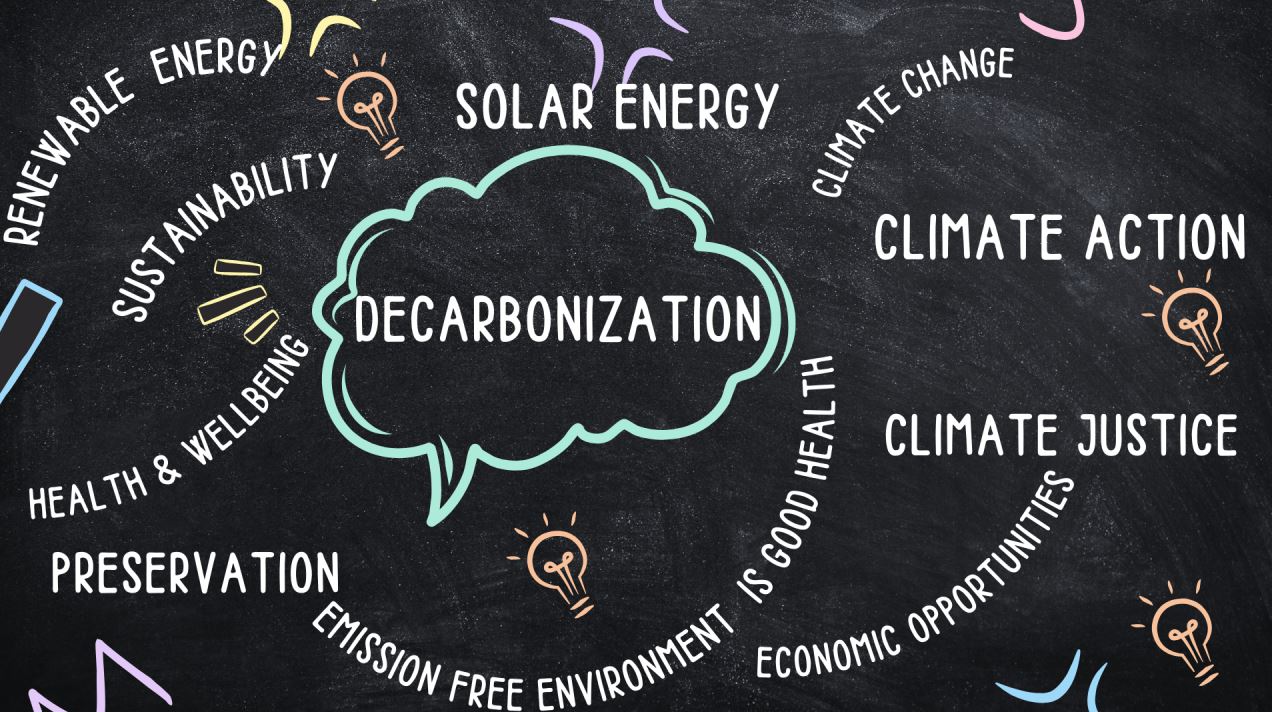
Global Decarbonization Strategies Are Reshaping Industry, Energy, and the Human Relationship with the Atmosphere
The Meaning of Decarbonization in a Changing World
Decarbonization is more than a scientific concept; it is a moral, economic, and cultural transformation unfolding across every continent. It represents humanity’s collective effort to reduce its dependence on carbon-based fuels that have powered progress for centuries yet destabilized the planet’s climate. The process does not simply mean cutting emissions. It involves rethinking how societies produce energy, design infrastructure, transport goods, and even grow food. Each sector of the global economy must learn to operate within the planet’s carbon limits, creating a future where development no longer comes at the cost of environmental equilibrium. This idea has matured from niche environmental policy to a central principle of modern economics. Governments, businesses, and communities are now confronted with the challenge of achieving net-zero emissions while maintaining stability and prosperity. The pursuit of decarbonization, therefore, is not just about technology; it is about reimagining civilization’s role within the carbon cycle that sustains all life.
Tracing Humanity’s Carbon Footprint Through History
The path to the present carbon crisis began with the first spark of industrialization. When coal-fired engines replaced muscle and wind, a new era of production began, one that linked energy with economic growth. Over time, this dependence deepened, spreading from coal to oil and natural gas. By the twentieth century, the carbon economy had become the backbone of modern life, powering factories, cars, and cities. However, as prosperity rose, so did pollution and atmospheric imbalance. Carbon dioxide, once absorbed naturally by forests and oceans, began to accumulate at unprecedented levels. Climate scientists later revealed that this invisible gas had the power to alter global temperatures, disrupt weather patterns, and reshape entire ecosystems. The industrial age had unintentionally triggered an atmospheric transformation. Today, the story of decarbonization is a reversal of that trajectory, a conscious effort to undo centuries of carbon excess while preserving the benefits of progress. It is both an apology and a renewal written through innovation and policy.
The Science Behind Carbon Reduction and Sequestration
At the heart of decarbonization lies a fundamental scientific principle: balance. Carbon naturally moves between air, water, and land in a cycle that maintains stability in the Earth’s climate. Human activity disrupted this rhythm by introducing vast quantities of stored carbon from fossil fuels into the atmosphere. To restore equilibrium, carbon must be reduced or captured before it contributes to warming. Renewable energy systems such as solar, wind, and hydroelectric power prevent emissions at the source, while technologies like carbon capture and storage intercept and lock away existing emissions. Nature-based solutions also play a vital role. Reforestation, soil regeneration, and wetland restoration absorb carbon through photosynthesis and organic processes. Together, these strategies form a dynamic toolkit for climate restoration. Yet science alone is not enough. Each solution must be scaled responsibly, supported by policies that ensure environmental integrity. The future of carbon management depends on integrating innovation with ecological wisdom, balancing precision engineering with the resilience of natural systems.
Energy Transition and Industrial Transformation
Energy lies at the core of the decarbonization effort. Nearly three-quarters of global greenhouse gas emissions stem from how humanity produces and uses energy. Transitioning from fossil fuels to renewables is therefore both the greatest challenge and the greatest opportunity of our time. Solar and wind power have grown exponentially, their costs plummeting as technology advances. Hydrogen, particularly green hydrogen generated from renewable sources, offers a clean alternative for heavy industries like steel and cement that are difficult to electrify. Meanwhile, the electrification of transport through battery technology is redefining mobility. Yet, this transition requires more than switching fuels. It calls for a redesign of entire systems, energy grids, supply chains, and urban infrastructure. Smart grids that balance fluctuating renewable inputs, storage systems that stabilize supply, and policies that reward efficiency form the foundation of this transformation. Industrial decarbonization will not happen overnight, but it is already reshaping global power structures, driving competition in innovation rather than extraction.
The Role of Governance, Policy, and Global Collaboration
Governments play a defining role in setting the pace of decarbonization. Policy determines whether economies accelerate or stall in their climate commitments. Carbon pricing mechanisms, such as emissions trading systems and taxes, create economic incentives for businesses to reduce pollution. International frameworks like the Paris Agreement unify countries under shared targets while allowing flexibility in approach. However, global coordination remains complex. Developing nations often face the dilemma of balancing growth with environmental responsibility, while wealthier countries must provide financing and technology to bridge that gap. Transparency, accountability, and fairness are essential pillars of global cooperation. Policymaking must also engage communities directly affected by energy transitions, such as coal miners and industrial workers, ensuring that decarbonization does not lead to displacement but rather transformation. The strength of policy lies in its inclusivity, where ambition aligns with compassion, and economic evolution is guided by justice as much as by data.
Corporate Responsibility and Economic Reinvention
Businesses occupy a critical frontier in the decarbonization movement. Once seen as part of the problem, many corporations are now leading the charge toward sustainability. Environmental, Social, and Governance metrics have become benchmarks for long-term success. Companies are adopting science-based targets to reduce emissions across their operations and supply chains. The shift toward circular production, where materials are reused, recycled, and repurposed, minimizes waste and energy use. Green finance is another growing force, channeling investments into low-carbon projects through bonds and sustainability-linked loans. Even traditional energy companies are diversifying portfolios to include renewables and bioenergy. This reinvention is not merely altruistic. Consumers, investors, and regulators increasingly demand transparency and responsibility. In the twenty-first century economy, sustainability is synonymous with competitiveness. The companies that thrive will be those that treat carbon reduction not as a constraint but as a catalyst for creativity. The corporate world, once powered by carbon, is now being rebuilt on the principles of regeneration and accountability.
Technological Innovation and the Future of Carbon Neutrality
The pursuit of carbon neutrality has become a technological race, driving innovation across multiple fields. Artificial intelligence optimizes energy distribution, predicting demand and reducing waste. Advanced materials enable more efficient solar panels and wind turbines, while breakthroughs in battery chemistry extend storage capacity. Direct air capture facilities are beginning to remove carbon dioxide directly from the atmosphere, offering a potential path to negative emissions. In parallel, digital twins, virtual models of real-world systems, allow scientists and engineers to simulate energy flows and identify inefficiencies before they occur. Biotechnology also contributes, with microorganisms engineered to convert waste carbon into valuable materials. Yet, technology alone cannot save the planet. Its success depends on ethical design, equitable access, and responsible deployment. The future will not be defined by the speed of innovation but by its wisdom. The ultimate measure of progress is not how much carbon can be removed, but how gracefully humanity can coexist with the natural systems that regulate it.
The Social Dimension of Decarbonization
Behind every technological and policy advancement lies a human story. Decarbonization is not only a scientific project but a social movement that touches livelihoods, cultures, and identities. Workers in carbon-intensive sectors face uncertainty as industries transition to cleaner alternatives. Communities dependent on fossil fuel economies require investment in retraining and infrastructure to ensure a just transition. At the same time, public participation becomes a powerful force in driving change. Grassroots campaigns, citizen assemblies, and youth movements have shifted the conversation from abstract climate science to moral urgency. Behavioral shifts, such as dietary changes, sustainable transport choices, and reduced consumption, amplify the effects of systemic policies. Education plays a pivotal role, nurturing environmental literacy from early childhood through higher education. When citizens understand the link between everyday habits and atmospheric stability, they become partners in progress rather than passive observers. Decarbonization thus becomes a shared journey where equity, empathy, and empowerment are as vital as energy itself.
Regional Pathways and the Challenge of Global Equity
While decarbonization is a global imperative, its pathways vary by region. Industrialized nations possess the resources to accelerate renewable transitions, while developing countries often struggle with infrastructure and financing gaps. Africa, rich in solar potential yet burdened by energy poverty, faces the dual challenge of expanding access while avoiding fossil dependency. In Asia, rapidly growing economies are experimenting with hybrid strategies that mix renewables with cleaner fossil alternatives as transitional steps. Europe leads with strict climate laws and cross-border carbon markets, while Latin America pioneers forest conservation and bioenergy. Each region contributes uniquely to the global mosaic of climate action. The challenge lies in ensuring fairness: historical emitters must shoulder greater responsibility, while developing nations must be empowered with technology and funding. Decarbonization will succeed only when it becomes inclusive, recognizing that no nation can solve the climate crisis in isolation. The future depends on cooperation grounded in solidarity, not competition.
The Promise of a Regenerative Planet
The vision of decarbonization extends beyond reducing pollution. It envisions a world where energy, industry, and nature operate in harmony. The ultimate goal is not simply to cut carbon but to restore balance, to allow forests, oceans, and communities to thrive together. A regenerative planet is one where growth regenerates rather than depletes, where cities breathe clean air, and where prosperity flows from respect for the Earth’s limits. This vision requires courage and patience, yet history shows that transformation begins with conviction. The global movement toward decarbonization is humanity’s most ambitious collective endeavor, one that defines this century. It asks societies to reimagine comfort, industry, and progress in the language of renewal. The carbon cycle, once disrupted, can become a story of redemption. If humanity continues to innovate with humility and act with purpose, the air we breathe tomorrow will carry not the residue of excess but the promise of restoration and unity with the world that sustains us.